


In a field defined by endless briefs and limitless possibility, how does a renowned studio like Amsterdam-based Kossmanndejong choose their projects? How do they determine which stories are worth telling—and which are better left alone?
In this Futurespaces session, Niels de Jong—Partner and Creative Director at Kossmanndejong—offered an unusually transparent look at how his team chooses their work, unpacking the ethics, tensions, and motivations that shape their global portfolio.
Drawing from his team’s work on the National Military Museum, the Dutch and UAE Pavilions at Expo 2020, and the forthcoming redesign of the La Brea Tar Pits, de Jong reveals how purposeful design emerges from considering not just what can be built, but what should be built. The conversation moves far beyond aesthetics and logistics; it becomes a call for “conscious creation”—work grounded in narrative integrity, environmental responsibility, and the courage of restraint.
If you missed the live session, the full recording is available on Futurespaces.com. Below is our editorial recap.
Why Project Selection Matters Now
Kossmanndejong has spent more than two decades designing “spatial stories” across 15 countries—immersive cultural experiences that move people emotionally and intellectually. But the world these stories exist in has shifted. The urgency is higher. The narratives more contested. The audiences, more attuned to intention.
As Niels explains, storytelling is never neutral. Exhibitions shape public memory, civic identity, and cultural truth. And because of that, his team applies a disciplined, five-part framework to every inquiry. The goal isn’t endless growth—it’s choosing with intention.
“A story that matters is rarely a simple story. It’s always very complex.”
The Work: What It Means to Design Stories That Matter
At the heart of Kossmanndejong’s approach is a single question: Does this story matter? And mattering, for them, means more than relevance. It means urgency.
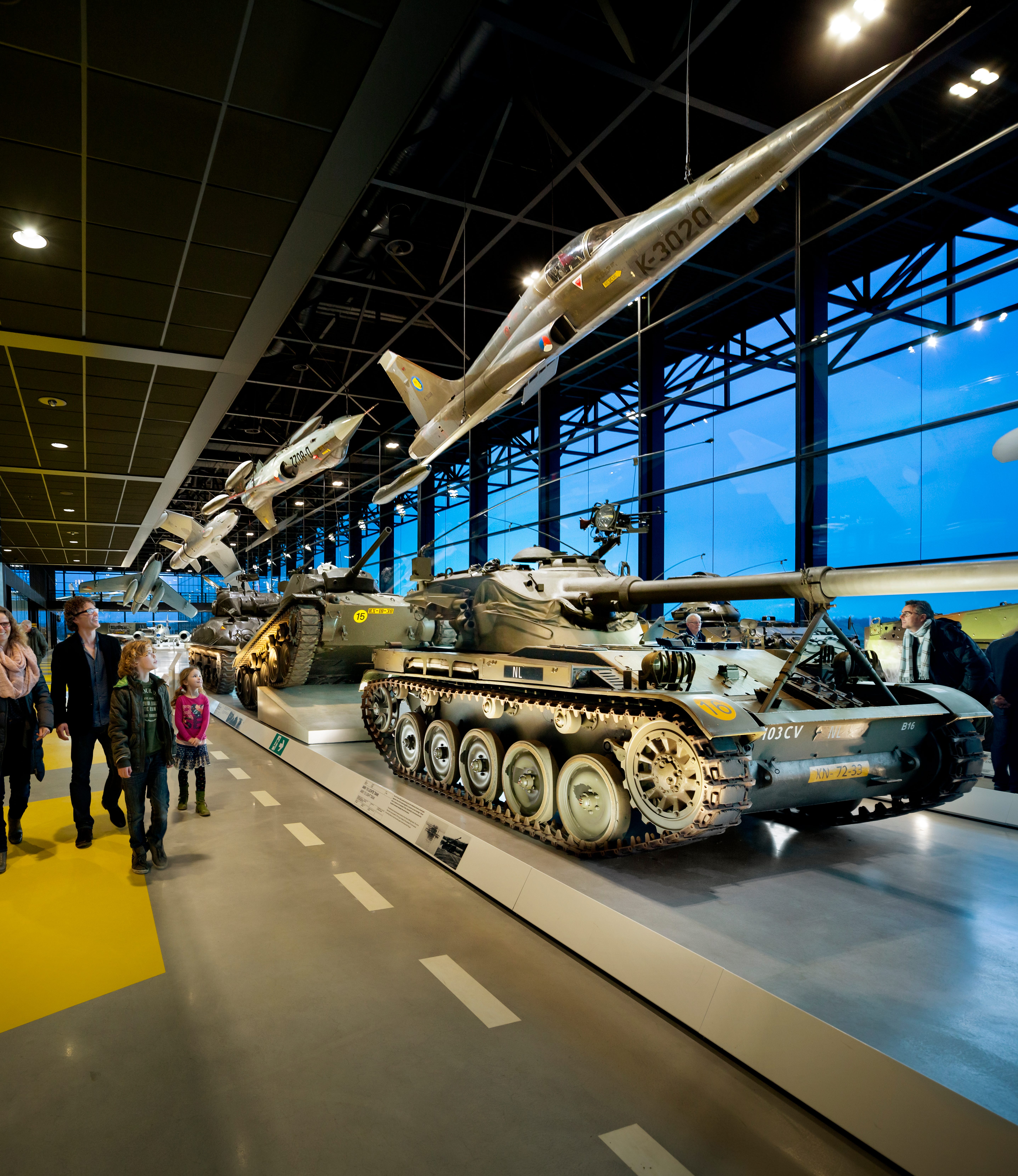
In the National Military Museum of the Netherlands, the team juxtaposed awe-inspiring military machinery with intimate human stories—including a devastating IED incident told through survivors and family members. The contrast wasn’t designed for dramatic effect, but to encourage visitors to reflect on the deeper human experience.
Niels notes that military and national museums often come with a built-in agenda: celebrate achievement, honor sacrifice, tell a national story. That foundation can make it difficult to introduce more complicated or uncomfortable perspectives. Still, he sees this tension not as a limitation but as a chance to bring honesty—and humanity—into the work.
Process: The Five Criteria That Guide Every “Yes” or “No”
When a new brief comes in, Niels and his team score it against five criteria—each carrying equal weight:
Price – A straightforward feasibility check.
Purpose – Does the story address an urgent issue or contribute meaningfully to the cultural moment?
Planet – Can the project be created and produced sustainably, in both material and operational terms?
Process – Is the collaboration likely to be healthy, coherent, and long enough (often years) to justify the investment of time and care?
Pleasure – Will the team find joy, curiosity, and creative energy in the work?
For Niels, pleasure is what keeps the work meaningful—what sustains curiosity across long, complex timelines.
“It’s not just about the courage to say no. It’s about the discipline to keep asking why.”
When Architecture Comes First: The UAE Pavilion (Expo 2020 Dubai)
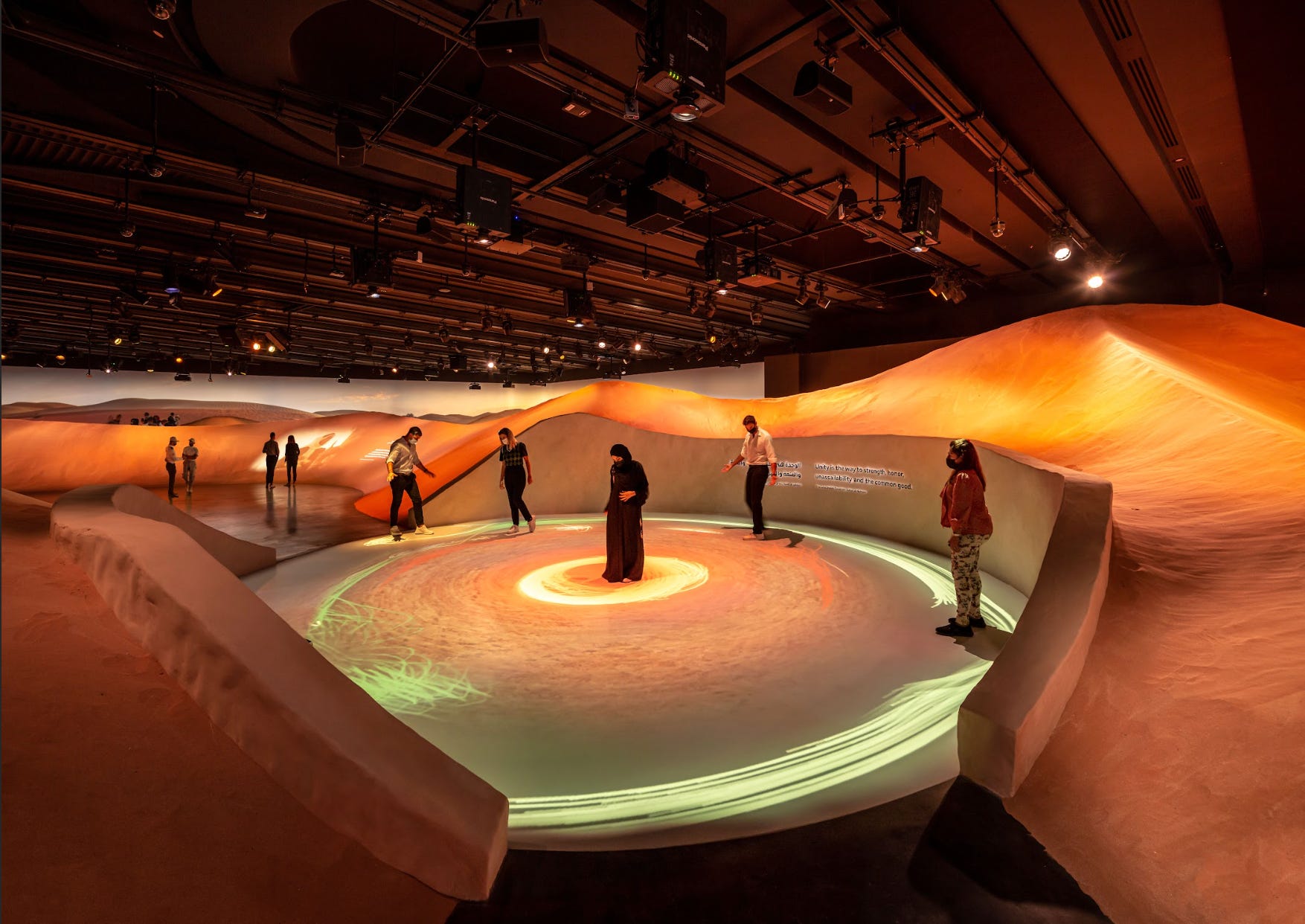
Kossmanndejong joined the UAE Pavilion after Santiago Calatrava’s monumental building was already designed and under construction—a breathtaking piece of architecture, but not one conceived for storytelling. The team had to reverse-engineer a narrative into a space defined by white surfaces and sweeping geometries: striking in theory, but unforgiving for theatrical exhibition design.
To create a coherent visitor journey, they rethought circulation entirely, even swapping the entrance and exit. They adjusted architectural elements, mapped narrative beats onto existing geometries, and built a storyline that could live inside Calatrava’s sculptural form rather than compete with it.
It was an exercise in humility and precision: finding narrative clarity inside a building that wasn’t built for stories.
When Story and Architecture Are One: The Dutch Pavilion (Expo 2020 Dubai)
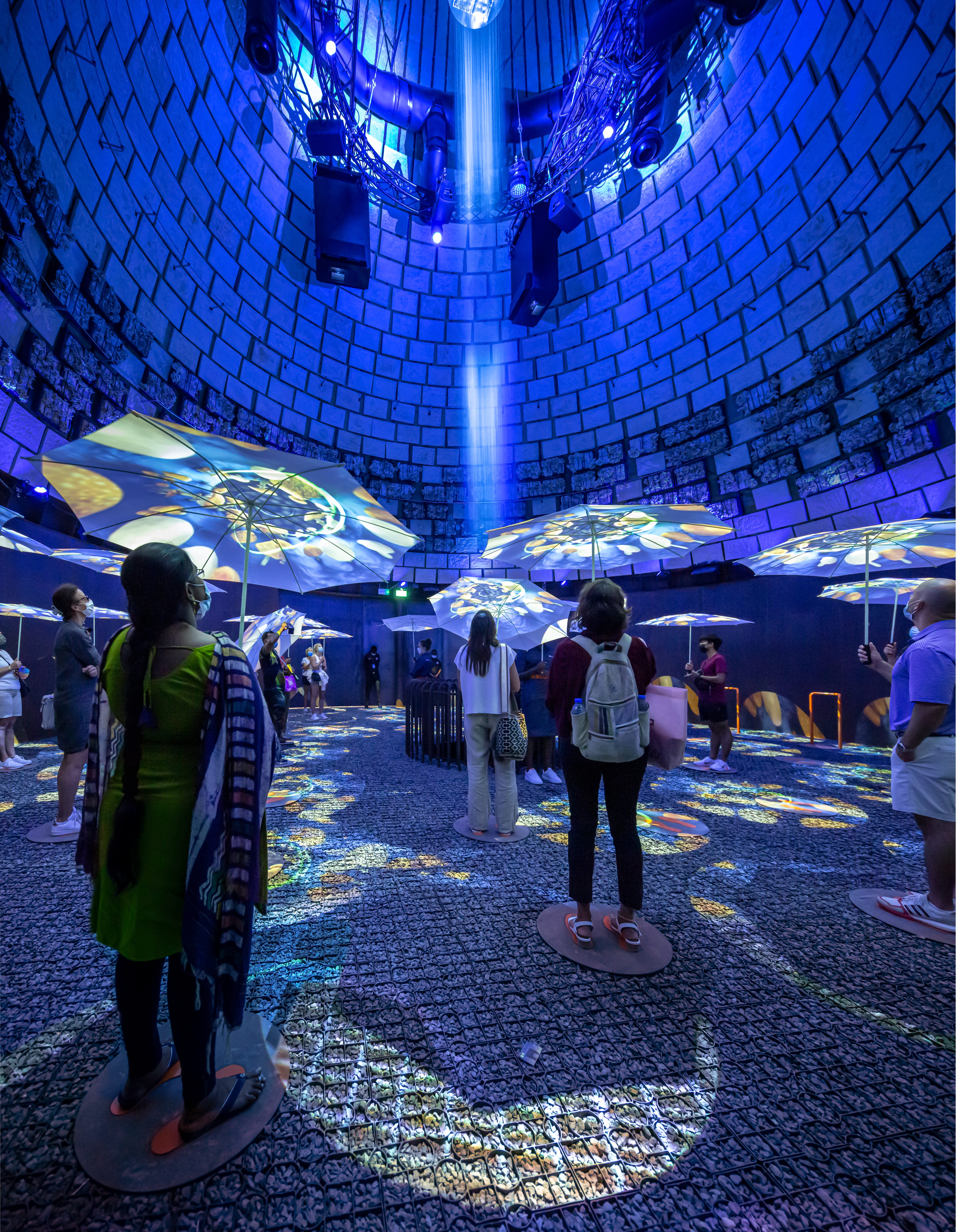
The Dutch Pavilion—developed with V8 Architects—was the opposite kind of project. From the first pitch to the final build, the pavilion’s architecture and its story were conceived as a single organism. The building was a functioning biotope: a temporary climate machine that pulled water from desert air, grew food inside a mycelium-clad interior cone, and operated on a circular material cycle.
After the expo, every component was returned, recycled, or biodegraded. Nothing was meant to last—except the ideas.
Here, narrative wasn’t added to architecture; it was embedded in its logic.
As Niels puts it,
“The most powerful stories emerge when the architecture and the experience speak the same language.”
Planet: Sustainability Is Not Optional
For Niels, sustainability is a baseline—not a feature. It must shape the work from the very beginning: materials, logistics, and long-term impact included.
This ethos guided Switzerland’s Nature and Us, where visitors walked barefoot to reconnect with raw materials, and mycelium-grown lampshades, visible screws, and humble construction details became part of the aesthetic. The team even minimized travel by taking trains instead of flights, embedding sustainability into both the work and the workflow.
That commitment is tested most intensely in Los Angeles, where Kossmanndejong is designing the new La Brea Tar Pits Museum with Weiss/Manfredi. The team confronted the question directly: Should an Amsterdam studio fly regularly to California, or should a local team take the lead? In this case, the story itself tipped the scale. La Brea is a once-in-a-generation museum—an active scientific site where ancient climate change can be touched in the ground beneath your feet.
The potential impact justified the involvement, and the team mitigates their footprint wherever they can: hybrid workflows, local hires, low-impact travel, and deliberate material choices.
The Challenge of Depth: Paddlers, Swimmers, and Divers
Working with scientists, historians, or government bodies inevitably creates tension around content depth. Experts want everything included. Visitors want clarity.
Niels uses the “paddlers, swimmers, divers” framework:
Paddlers get the essential narrative in 45 minutes.
Swimmers explore deeper layers.
Divers see everything.
The lesson? You must prioritize the core narrative. Everything else belongs in books, websites, or educational programs.
“Experts always want everything in. But that’s how you end up with a very dense exhibition.”
Vision & What’s Next: Telling Urgent Stories with Integrity
Kossmanndejong’s goal isn’t to become the biggest studio. It’s to stay true to purpose—choosing work that moves people, encourages critical thinking, and stays with visitors long after they leave.
“If a story is told with integrity and care, we believe it can change the world—even just a little bit.”
What’s next is not a chase for prestige. It’s a pursuit of meaningful narratives, responsible processes, and collaborations built on trust.
Connect with Niels
If you have a story worth telling, Kossmanndejong welcomes collaborators who want to transform ideas into meaningful spatial experiences. Explore more on their website and get in touch.
Author’s Note
This article was produced by Futurespaces based on Niels de Jong’s talk and follow-up conversation. Futurespaces is a community of experience designers and cultural thinkers exploring how innovation deepens connection—through live conversations, behind-the-scenes tours, and curated insights into contemporary creative practice.


