


In a world that prizes productivity and efficiency, designer Cas Holman invites us to imagine something radical: what if the most essential form of learning, thinking, creating—and connection—came through play?
Holman, founder of Heroes Will Rise and creator of the celebrated open-ended building kit Rigamajig, has built her career around designing for others to design. Her toys, playgrounds, and installations encourage imaginative collaboration and experimentation—what she calls “designing for playful rebellion.”
Last Thursday, Holman joined Futurespaces fresh off the launch of her first book, Playful (released October 21), which centers on this very idea: that adults need free play just as much as children do.
“Play is how we learn to be human, how we learn who we are, how we learn to fail, communicate, love, fight, rebel, desire, build, and survive. At its best, play is life-affirming, soul-sustaining, and mind-expanding.” — from Playful
Holman’s practice lives at the intersection of design, psychology, and social change. From the Queens Museum to the Liberty Science Center to camps for asylum seekers and displaced families along the Mexican border, she builds spaces where friction and collaboration aren’t obstacles to overcome—they’re the very tools of discovery.
The Rebellion in Play
Holman opened her talk by reflecting on the turbulence of our times. Amidst polarization, fear, and fatigue, she offered one constant: play is a form of protest.
This isn’t metaphor. In her recent Guardian essay, Holman described how protesters—rallying in defense of democracy and human rights—responded not with anger, but with absurdity. “Frogs showed up in inflatable costumes by the dozens. Clowns came out dancing. Naked cyclists rode among unicycles, chiming bike bells and honking rubber horns.” What began as an accusation of chaos became, through play, a performance of joy and solidarity.
“The performance of power and control,” she wrote, “was being met not with protest, but with play.”
For Holman, this playful defiance reveals something profound about human nature.
“In childhood we play to become who we are. In adulthood we play to express and sustain who we are.”
To be playful now, she argues, is not to trivialize the seriousness of our times—it’s to meet that seriousness with resilience, empathy, and creative imagination.
Holman speaks from experience. As a queer designer and educator, she connects play to survival, recalling that “queer people have always used play as protest.”
From the Stonewall Uprising to today’s parades and performances, she writes, “Our play is how we both experience our resilience and express it. It’s how we reject mischaracterizations that seek to shame and silence us.”
That spirit animates her design practice. Whether in a museum gallery or a camp for displaced families along the Rio Grande, her work invites people to create, rebuild, and imagine together—to rediscover agency through shared invention.
“Play is how we sustain.”
Design as a Practice of Play
Holman’s approach to design begins not with control, but with release. She invites people to explore, improvise, and respond to what emerges rather than plan an outcome. “Uncertainty isn’t something we’re going to fix,” she said. “The more we can play with it, the more comfortable we become there.”
She defines free play as “freely chosen, personally directed, and intrinsically motivated.” It’s not about diversion or entertainment—it’s an act of agency. In a culture that rewards clarity and optimization, Holman builds systems that depend on openness.
“I don’t believe in frictionless,” she said. “Friction means you might need help—and that’s okay. Collaboration is part of life.”
At its core, her work asks a simple question: how can design invite participation instead of prescribing behavior? Her answer lies in creating frameworks that encourage discovery, negotiation, and care—spaces that only make sense when shared.
The Work in Play
Holman’s philosophy comes alive in the projects themselves—playful infrastructures that reshape how people meet and make together.
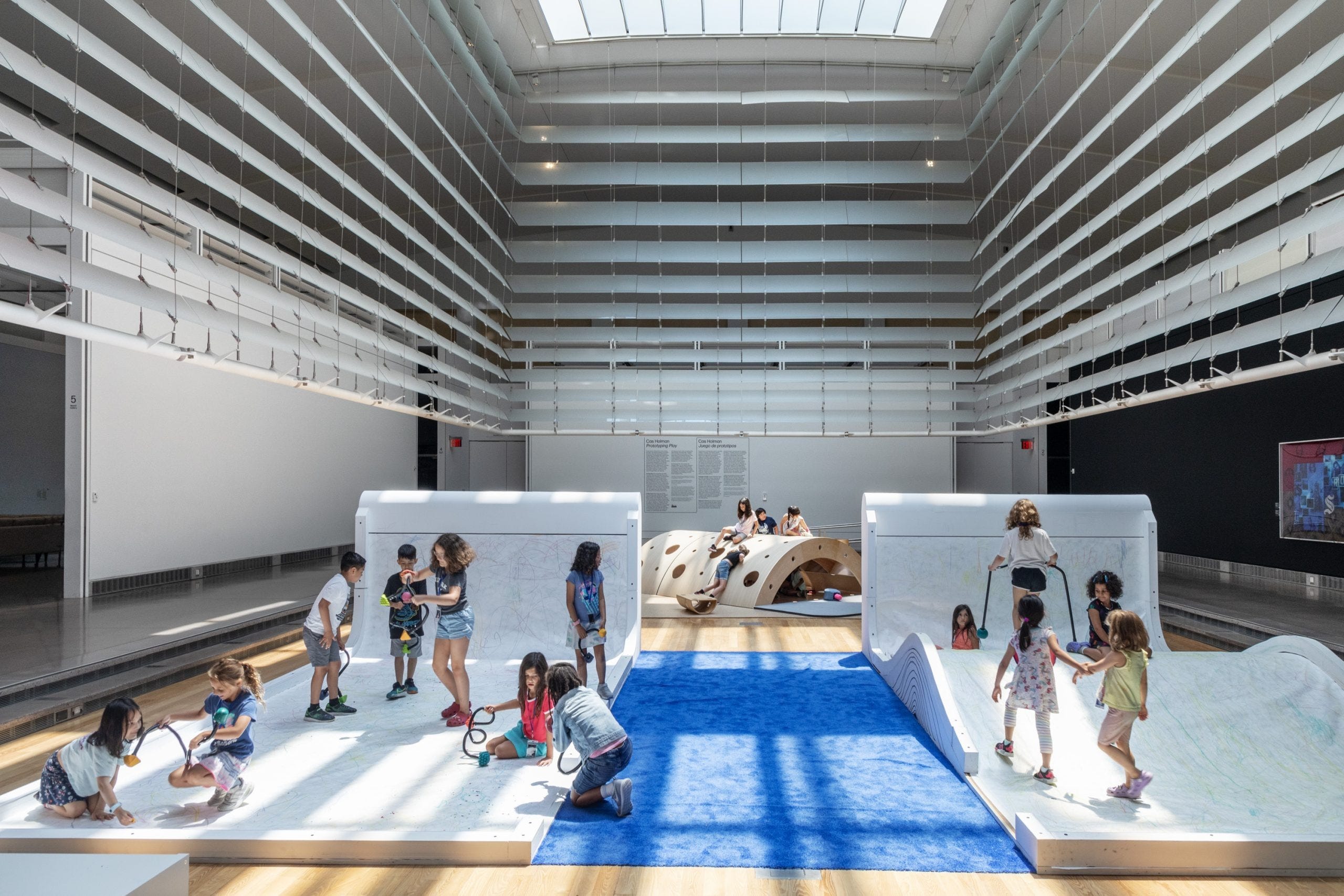
At the Queens museum, her exhibition Cas Holman: Prototyping Play, explored the intersection of art-making and play through toys and tools that invite participatory imagination. The installation transformed the museum’s Skylight Gallery into a living studio for intuitive, child-directed exploration. Released in two phases, the project fostered collaboration, invention, and interactivity through open-ended playthings that encourage visitors to extend their own movement and imagination.
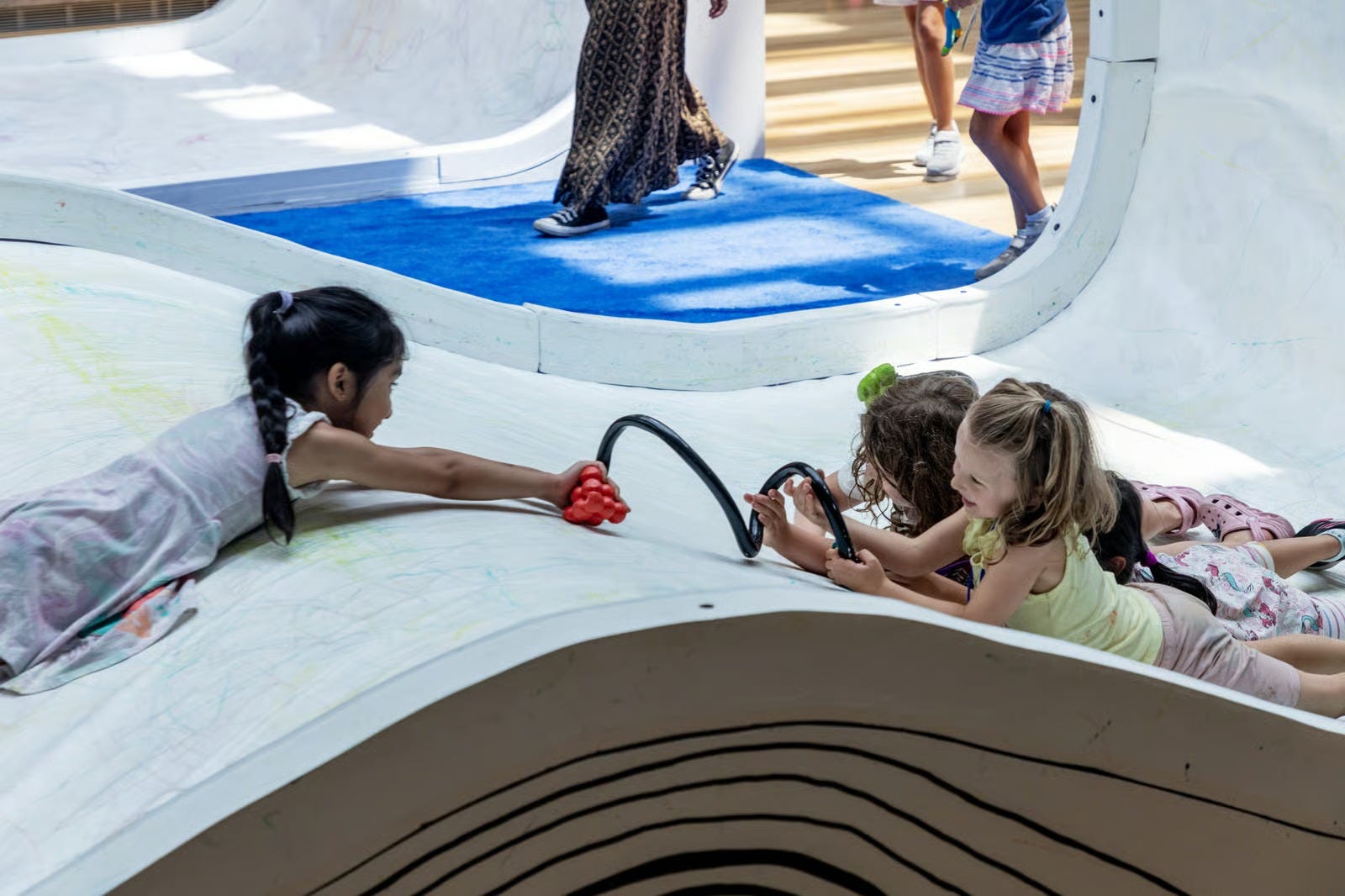
The first phase, Tracing Play, launched in May 2024 and filled the gallery with human-sized Drawing Tools—oversized rollers and brushes equipped with large crayons—alongside expansive Drawing Pads of Tyvek. These awkward, body-scaled instruments require cooperation to operate. The result isn’t a perfect picture, but a joyful choreography of movement and mark-making.
“It made families realize that the museum is, in fact, for them,” Holman said. “It doesn’t have to be an intimidating space that’s clean and perfect—it can be something they can engage and really make their own.”
The second phase, Critter Party, opened later that year and introduced the Mama Critter, Baby Critters, and a collection of modular Thingies—soft, climbable, reconfigurable forms that invite storytelling, crawling, sliding, and collaborative construction. As each visitor rearranges these forms, the environment transforms with them. Holman designed the Critters to demonstrate how scale and shape influence our relationship with space—and how many ways of playing can coexist within the same environment.
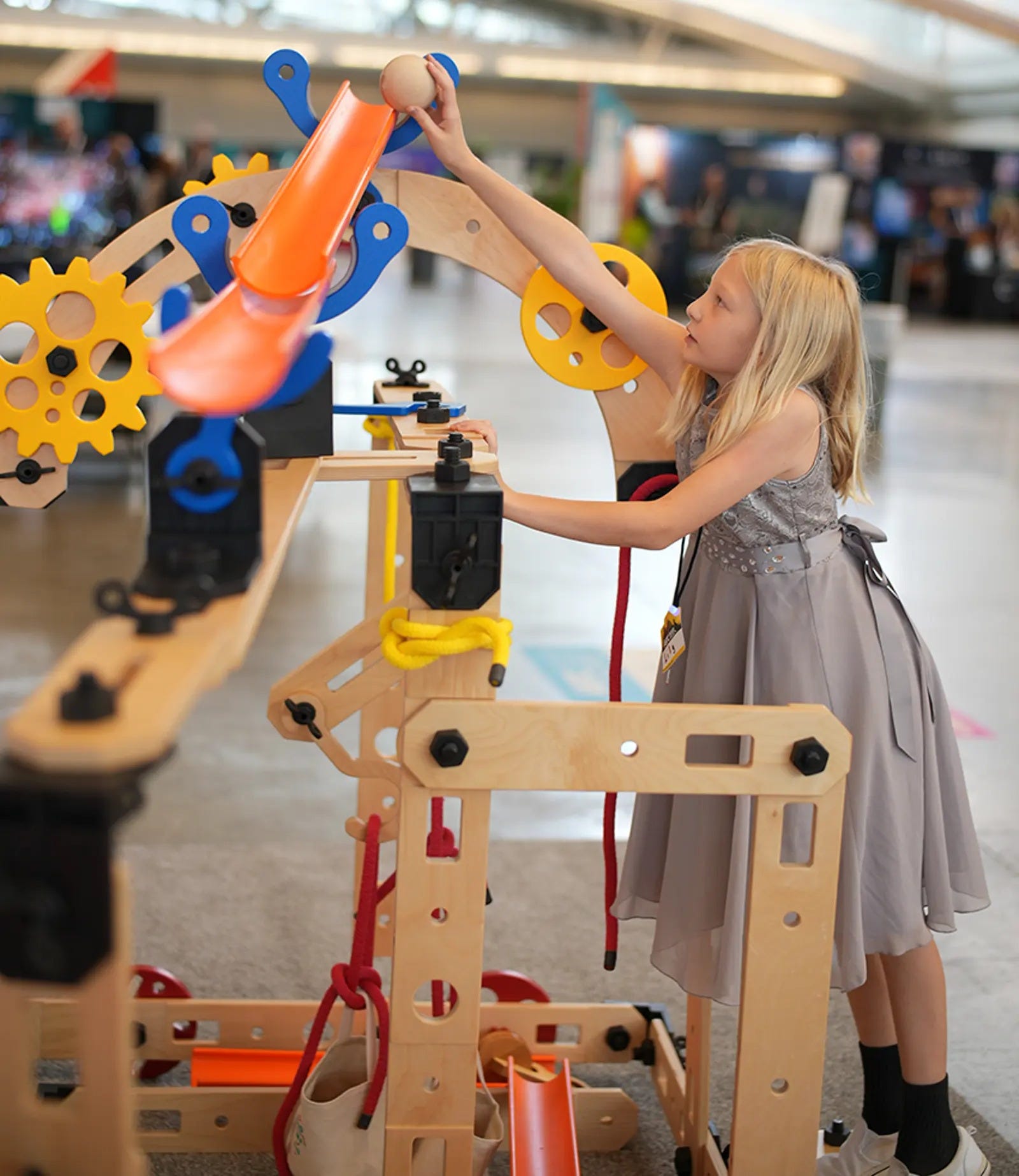
“We design for the social, not just the physical,” Holman explained. “You can’t move these pieces by yourself—you need help. And that’s part of the learning.”
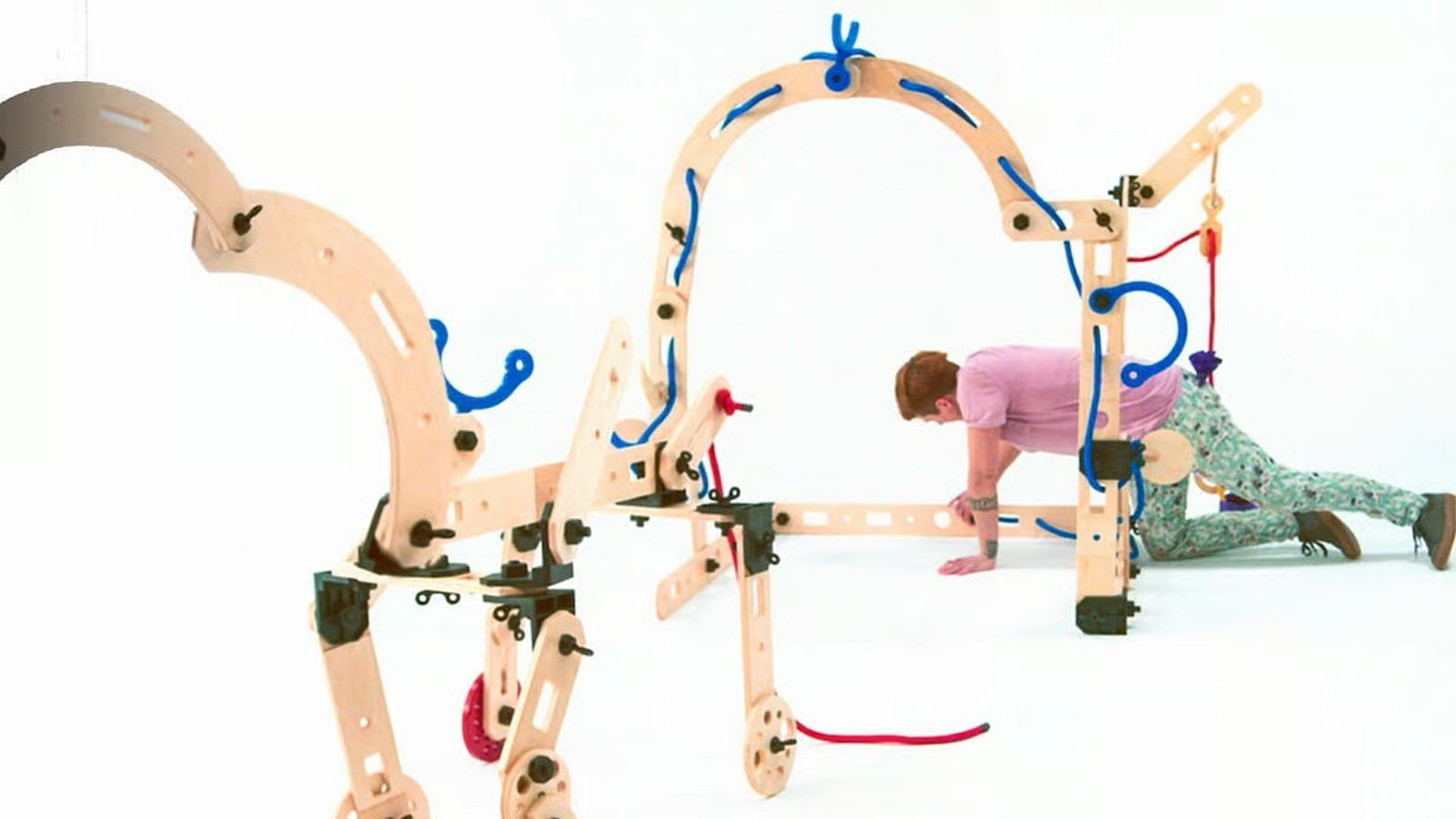
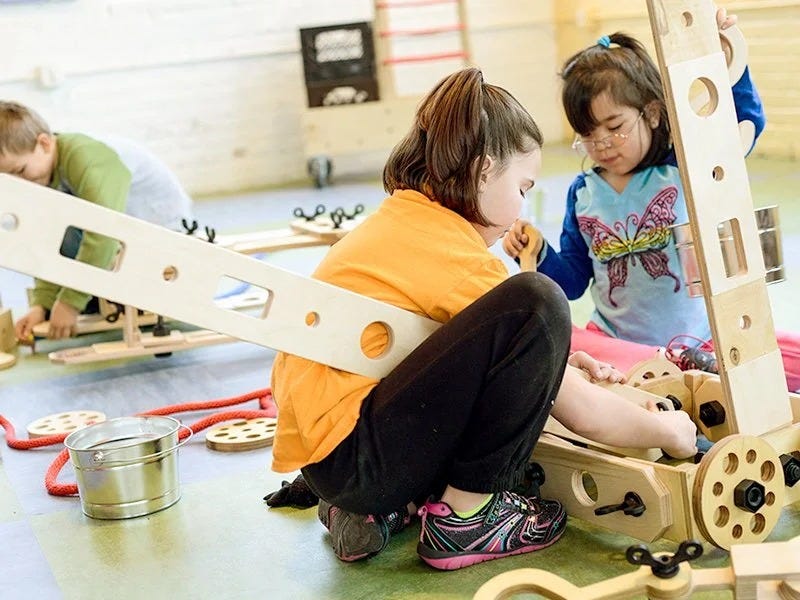
Holman’s best-known creation, Rigamajig, extends that same invitation beyond the museum. Originally designed for a pop-up playground on New York’s High Line, the large-scale wooden building kit now lives in schools, parks, and museums worldwide. Each beam, pulley, and bolt is intentionally oversized—too heavy for one person to manage alone. Collaboration isn’t a byproduct; it’s the structure itself.
Through projects like these, Holman redefines play as a collective act of making. Whether in a museum, a classroom, or a city park, her designs transform space into a shared experiment. What matters most isn’t what gets built, but how—and with whom. In her hands, play becomes a form of design research, a way of practicing empathy through action, and a rehearsal for building the worlds we want to live in.
The Future of Play
For Holman, play doesn’t end with childhood—it evolves. Her work now explores how the principles of free play can transform how we learn, collaborate, and lead.
In collaboration with the International Training Centre of the International Labour Organization (ITC ILO), Holman led a workshop on the future of learning, bringing together participants aged eight to eighty.
Instead of beginning with frameworks or instruction, she began with open-ended play—art interpretation, group making, and collective movement. As people built and responded to one another, boundaries of role and expertise dissolved.
“The future of learning,” Holman said, “is learning each other.”
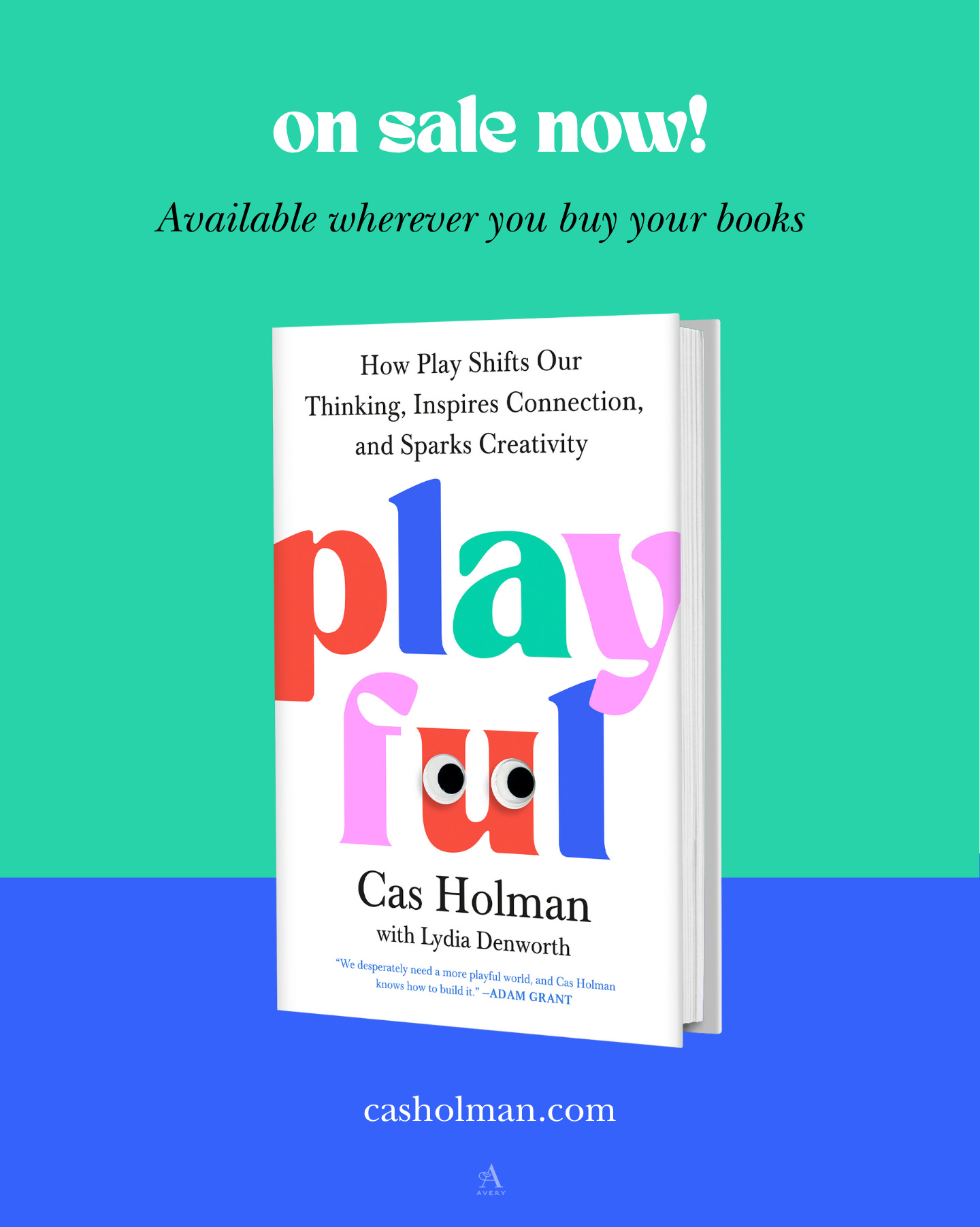
That belief anchors her book, Playful: How Play Shifts Our Thinking, Inspires Connection, and Sparks Creativity, co-written with science journalist Lydia Denworth. Part design philosophy, part social reflection, it argues that play is not a pastime but a mindset—a way to cultivate resilience, empathy, and imagination in a world that demands all three.
“Adults need to play,” she writes. “We’re still constructivist learners—we have to do the thing.”
Holman’s work reminds us that to play is not to disengage from the world, but to re-engage with it more fully—to experiment, to listen, to make meaning in motion. The spaces she creates are not escapes from reality but rehearsals for a more connected one.
Go Playfully
Play, Holman insists, is how we sustain. It’s how we stay curious enough to adapt, generous enough to collaborate, and brave enough to keep building in the face of what feels impossible.
For designers, educators, and makers alike, her challenge is simple: don’t just design systems of efficiency—design invitations for wonder. Don’t just go play—go playfully.
Connect with Cas:
Website: casholman.com
Instagram: @casholman and @rigamajig_toy
LinkedIn: Cas Holman
Author’s Note
This article was produced by Futurespaces, based on Cas Holman’s talk Designing for Playful Rebellion and the ideas explored in her book Playful. It’s part of Futurespaces’ editorial series exploring creative reinvention, technology, and storytelling futures—bringing together designers, artists, and technologists building experiences that deepen human connection.
Futurespaces, founded and led by Josh Goldblum (Bluecadet), delves into contemporary experience design through live webinars, in-person tours, and curated editorial insights into the creative processes shaping tomorrow’s worlds.


